
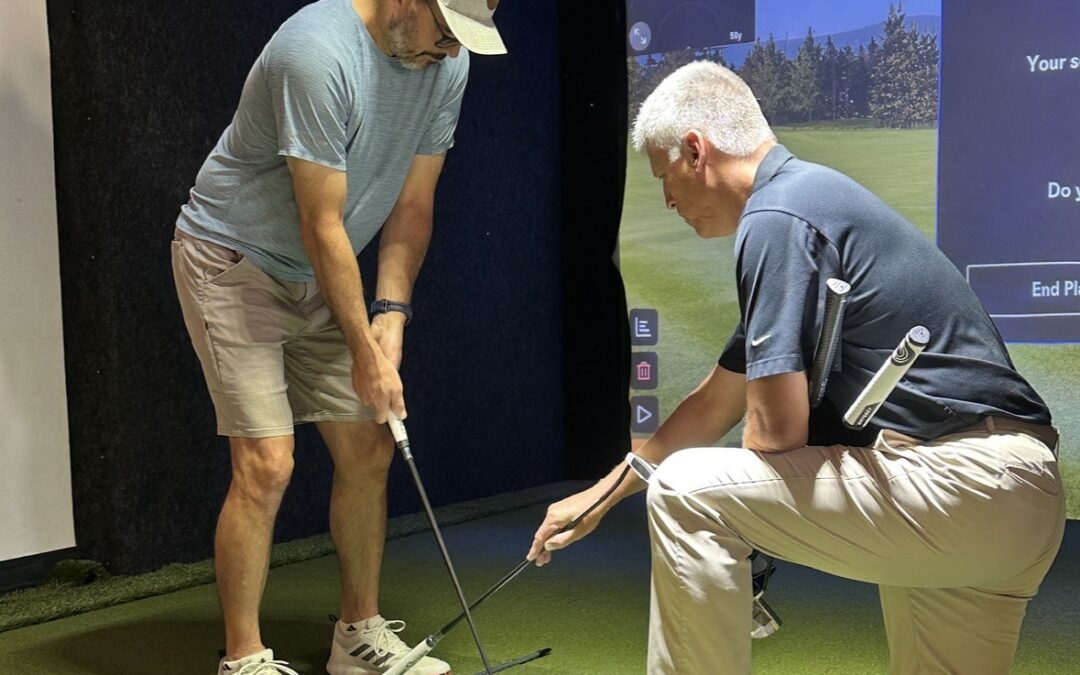
The goal of a good club fitting is to help you understand what equipment actually fits your body, your swing, your preferences, and your goals. (And that doesn’t necessarily mean buying the most expensive clubs.)
What You’ll Learn:
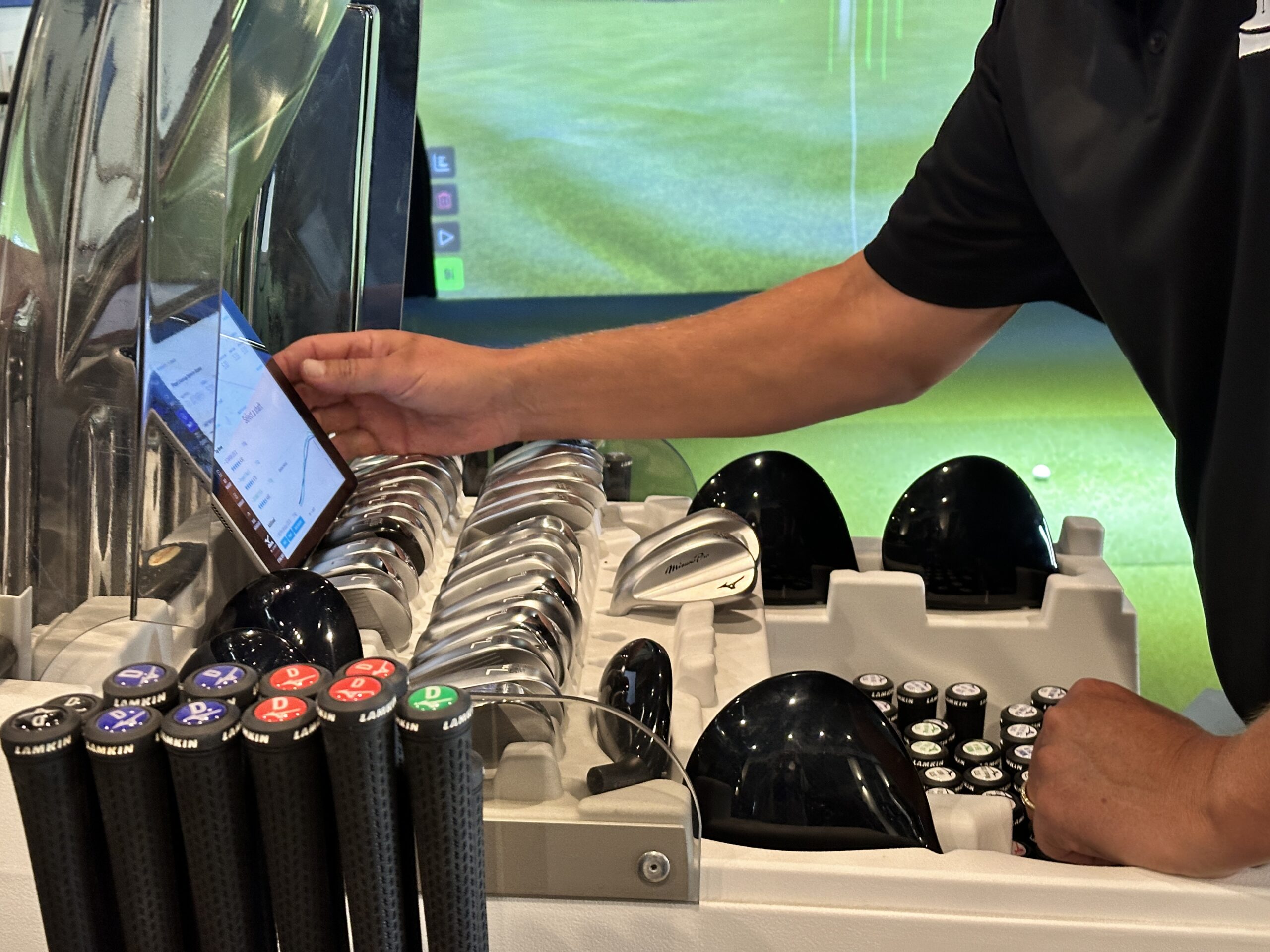
What Is a Golf Club Fitting?
A golf club fitting is an evaluation of how different club specifications affect your golf swing and ball flight.
A fitter may look at things such as:
- Height and arm length
- Hand size and grip preference
- Posture and comfortable setup
- Swing speed
- Swing tempo
- Swing path
- Attack angle
- Shaft characteristics
- Club length
- Lie angle
- Loft
- Ball flight
- Launch and spin
- Your preferred feel
- Your goals and skill level
Some of these factors can be measured. Others require a fitter to watch you swing, ask questions, and pay attention to what feels natural.
Basically, the numbers can tell you what is happening. Experience helps determine what to do with all the information (and often picks up on the things the numbers don’t…)
Is A Club Fitting Worth It?
A fitting isn’t about magically adding 20 yards to your game, shaving off 5 strokes from your score, or fixing a bad swing. It’s about removing equipment variables that may be making it harder for you to consistently deliver the club.
In an average fitting we look at over 40 characteristics of a golfer’s swing rather than using swing speed alone. Meaning your answer likely isn’t as simple as “getting an extra stiff shaft…”
👉 Same swing speed does NOT = same fitting.
Example:
Imagine two golfers who both swing a 7-iron at 85 mph. That doesn’t automatically mean they should play the same club…
Their swing, posture, height, attack angle, eye dominance, tempo, and so much more, may be completely different!
What Does a Club Fitting Actually Measure?
Short Answer: A professional fitting can combine static measurements—things about your body and setup—with dynamic measurements—things that happen while you swing.
STATIC
These measurements can include:
- Height
- Wrist-to-floor measurement
- Arm length
- Hand size
- Comfortable posture
- Grip preference
These measurements help establish a starting point for things such as club length, lie angle, and grip size.
DYNAMIC
These measurements look at what happens during your actual swing.
Depending on the fitting system, they can include:
- Clubhead speed
- Tempo
- Release
- Shaft loading
- Shaft bend
- Attack angle
- Shaft lean
- Dynamic lie angle
- Ball speed
- Launch angle
- Spin
- Direction and dispersion
How Does Grip Size Affect My Club Fitting?
Your grip is your only physical connection to the golf club, so it deserves more attention than it sometimes gets.
Grip size can affect how comfortable you are holding the club and how your hands interact with the club throughout the swing.
HINT: Hand size provides a useful starting point, but it isn’t necessarily the final answer.
Your hand comfort, grip pressure, and swing can all matter. A grip that feels too large or too small can also influence how you release the club.
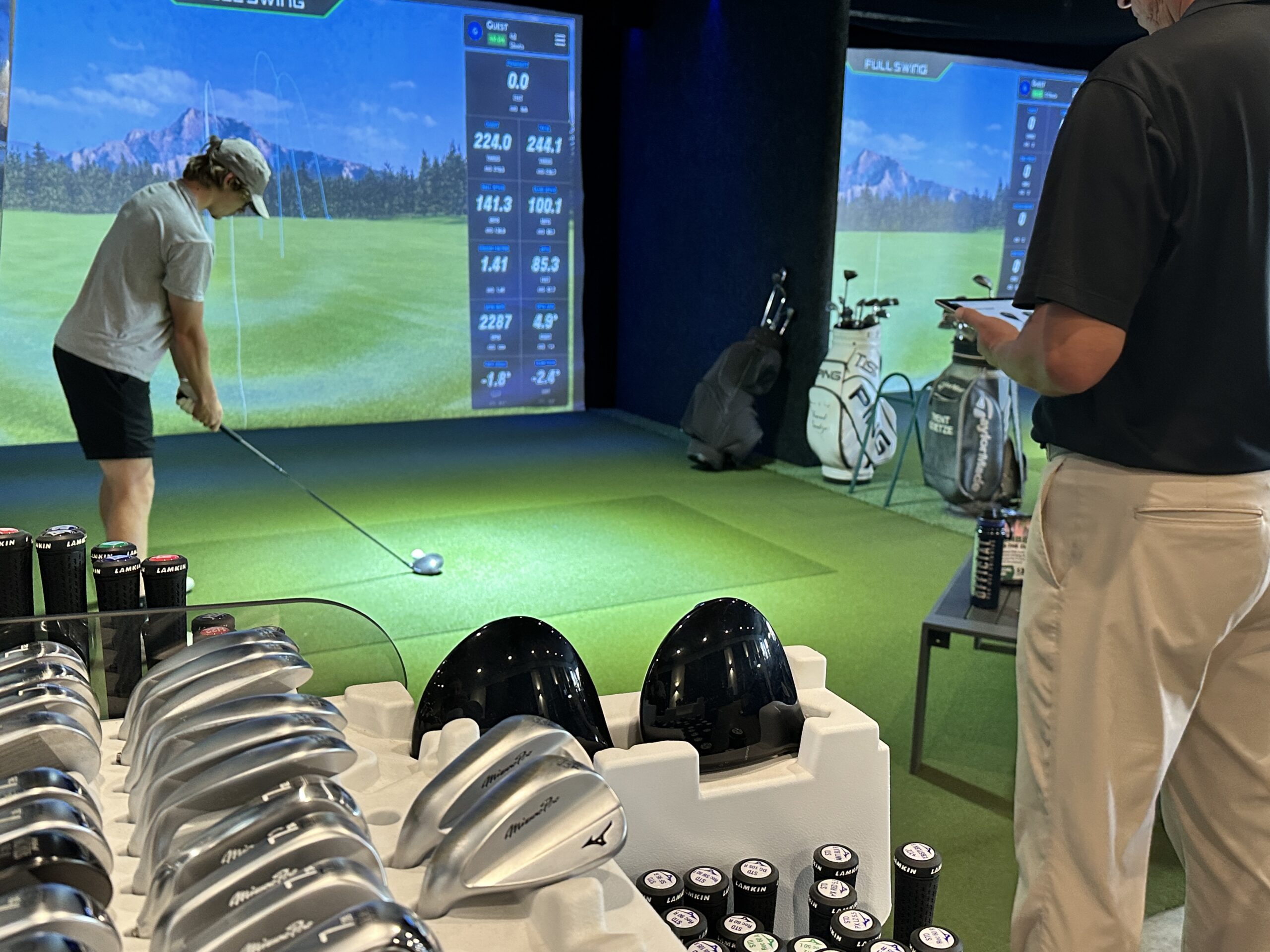
What Is “Lie Angle,” and Why Does It Matter?
Lie angle is the angle between the shaft and the sole of the club when the club is positioned correctly behind the ball.
If the lie angle isn’t well matched to your swing and setup, it can influence the direction and consistency of your shots. Sounds simple, right? WRONG!
The lie angle that LOOKS right when you’re standing still isn’t necessarily the lie angle that IS right when you’re swinging. Your posture, swing plane, delivery, and impact conditions all matter.
That is where DYNAMIC LIE comes in. Our Mizuno Shaft Optimizer 3D uses a built-in gyro to measure the club’s movement in three-dimensional space and help determine dynamic lie angle.
More Frequently Asked Questions about Club Fitting:
Does Height Determine What Golf Clubs I Need?
Club length can influence posture, strike location, consistency, and how comfortably you swing. Height matters, but height alone isn’t enough to understand what fits…
Two golfers can be the same height but have different arm lengths and different natural postures.
For example, a taller golfer with longer arms may not need the same club length as another golfer of the same height with shorter arms.
The goal isn’t simply to make the numbers match a chart. A fitter should also see how you naturally stand to the ball and how you move the club.
How Does Swing Path Affect Club Fitting?
Your swing path is another HUGE piece of the puzzle.
A golfer who swings more from the inside may interact with the club differently than someone who swings across the ball.
> This can influence what club specifications and head designs work best for that golfer.
It can also affect how a golfer interprets a fitting. For example, if a golfer tends to swing across the ball, changing equipment might not completely eliminate a slice—but the right equipment could still help produce a more playable and consistent result.
DISCLAIMER: Club fitting isn’t a substitute for instruction.
Sometimes the best answer is equipment. Sometimes it’s a swing change. Sometimes it’s both.
That’s why an experienced fitter should look at the whole golfer rather than trying to solve every problem with a new club.
How Does Swing Speed Affect A Club Fitting?
Swing speed can help determine an appropriate range of shaft weight and flex, but two golfers with similar speeds can load and release the shaft very differently.
Our Mizuno Shaft Optimizer specifically measures characteristics such as head speed, tempo, toe-down, kick angle, release factor, and shaft lean to help identify suitable shaft options.
Does Eye Dominance Affect A Club Fitting?
Putting is different from a full swing because your ability to aim the putter face and perceive the target line plays a MAJOR role.
Your dominant eye, visual alignment preferences, posture, putter length, and putter design can all influence how comfortable you are setting up and aiming.
Trent recently did a putter fitting for a golfer who was missing to the right roughly 90% of the time—even when he tried to compensate. After looking more closely at his putter setup and eye dominance, the fitting revealed that his equipment was working against the way he naturally aimed. Once the putter was better matched to him, his results changed dramatically.
That doesn’t mean eye dominance determines the perfect putter for every golfer. It means your visual system and your putting setup are worth considering when you’re trying to understand why you aim the way you do.
The Fitting Technology We Use:
At Airway Hills, one of the tools used in the fitting process is Mizuno’s Swing DNA / Shaft Optimizer 3D system.
The system is designed to measure how a golfer loads and unloads the shaft during the swing. It’s specially equipped club that uses strain gauges and a gyro to capture more than 40 swing data points. Among the key measurements Mizuno identifies are:

- Head speed — helps establish a starting point for shaft flex, loft, and set makeup
- Tempo — measures the transition into the downswing
- Toe-down — measures how the shaft bends downward during the swing
- Kick angle — measures forward shaft bending
- Release factor — looks at when and how the club releases
- Digital lie angle — uses the built-in gyro to measure the swing plane
- Attack angle — helps understand how the club approaches the ball
- Shaft lean — helps evaluate launch characteristics
The system then compares the golfer’s swing profile against a database of more than 50 iron shafts.
Basically, it helps the fitter narrow down where to start. You still hit the clubs. You still see the results. And you still get to decide what feels and feels/performs best.
Does a Club Fitting Fix a Bad Golf Swing?
No! This is something we take very seriously at Airway Hills (and anyone who gives a club fitting should too!)
A fitting isn’t designed to hide swing problems, it’s designed to help make sure your equipment isn’t creating unnecessary problems of its own.
If you have a major swing flaw, lessons may be the better place to start.
NOTE: Not all fittings are approached the same way. A good fitting should be about more than finding a club that technically matches your current swing—it should help you understand your equipment, your swing, and what will actually help you improve.
At Airway Hills, we take the time to look at the whole golfer, not just the numbers. If we think a couple of lessons or a few swing adjustments would be a better use of your money than purchasing new clubs right away, we’ll tell you. And during a fitting, don’t be surprised if we make a few small adjustments to your setup or swing and work through them with you. You may leave with new equipment, but you should also leave with a better understanding of your game and tools you can actually use.
Long story short… make sure you do your research and trust the people you are getting fit by so they don’t take advantage of you.
And sometimes the answer is both. The best golfers don’t necessarily have perfect swings – they have equipment that allows their individual swings to produce repeatable results.
How Do I Know If My Golf Clubs Are the Wrong Fit?
There isn’t one symptom that proves your clubs don’t fit. But it may be worth investigating if you notice things like:
- Consistently inconsistent contact
- Difficulty controlling ball flight
- A trajectory that doesn’t match your normal swing
- Clubs that feel uncomfortable or difficult to control
- A grip that doesn’t feel natural
- A posture that feels forced
- Difficulty getting consistent distance
- A club that consistently produces a miss in one direction
- Equipment you’ve inherited or purchased without being fitted
- Major changes in your swing, strength, flexibility, or physical condition
None of these automatically mean you need new clubs. They simply give you a reason to ask whether your equipment is helping or hurting.
What Should I Expect During a Club Fitting at Airway Hills?
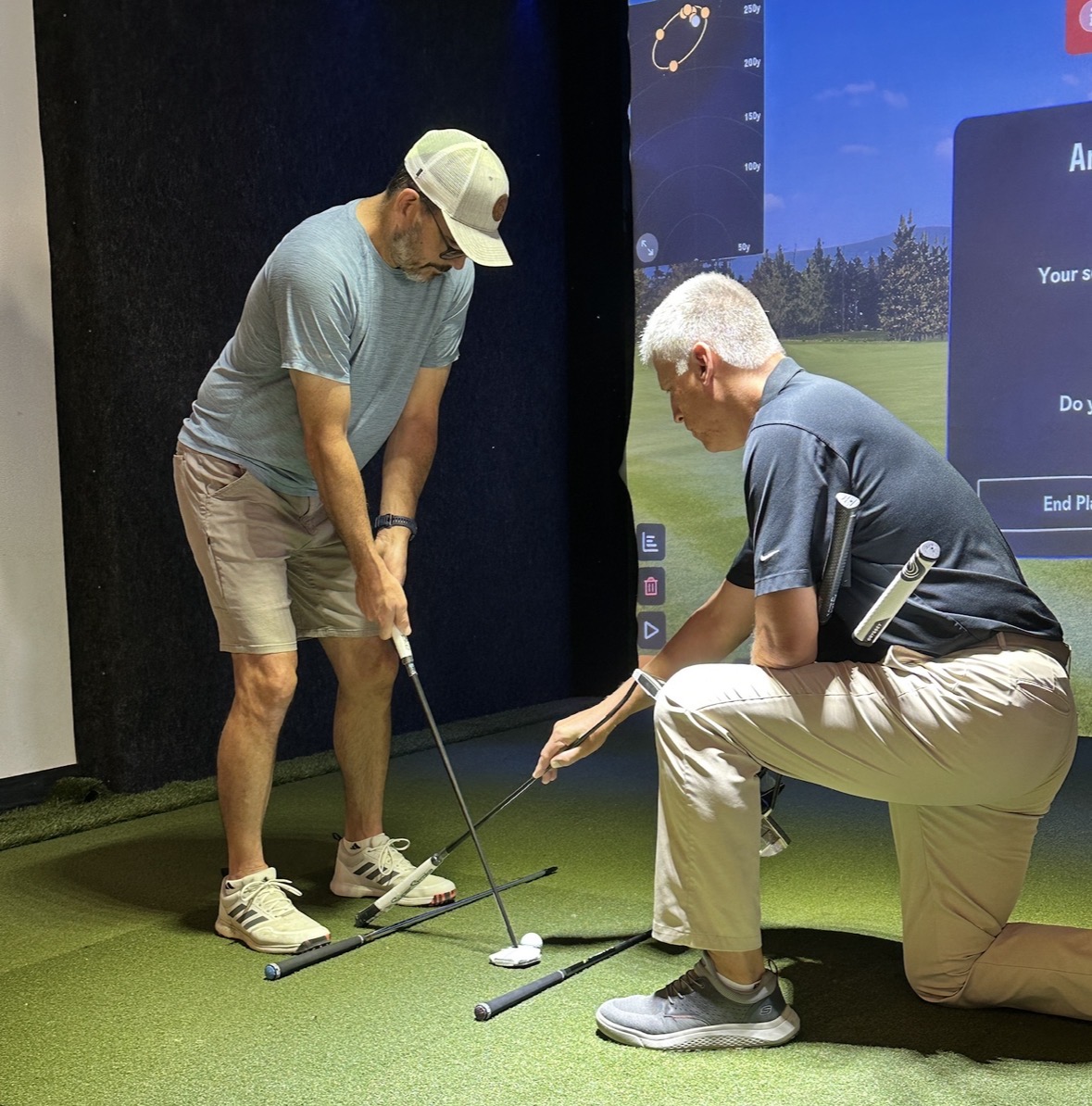
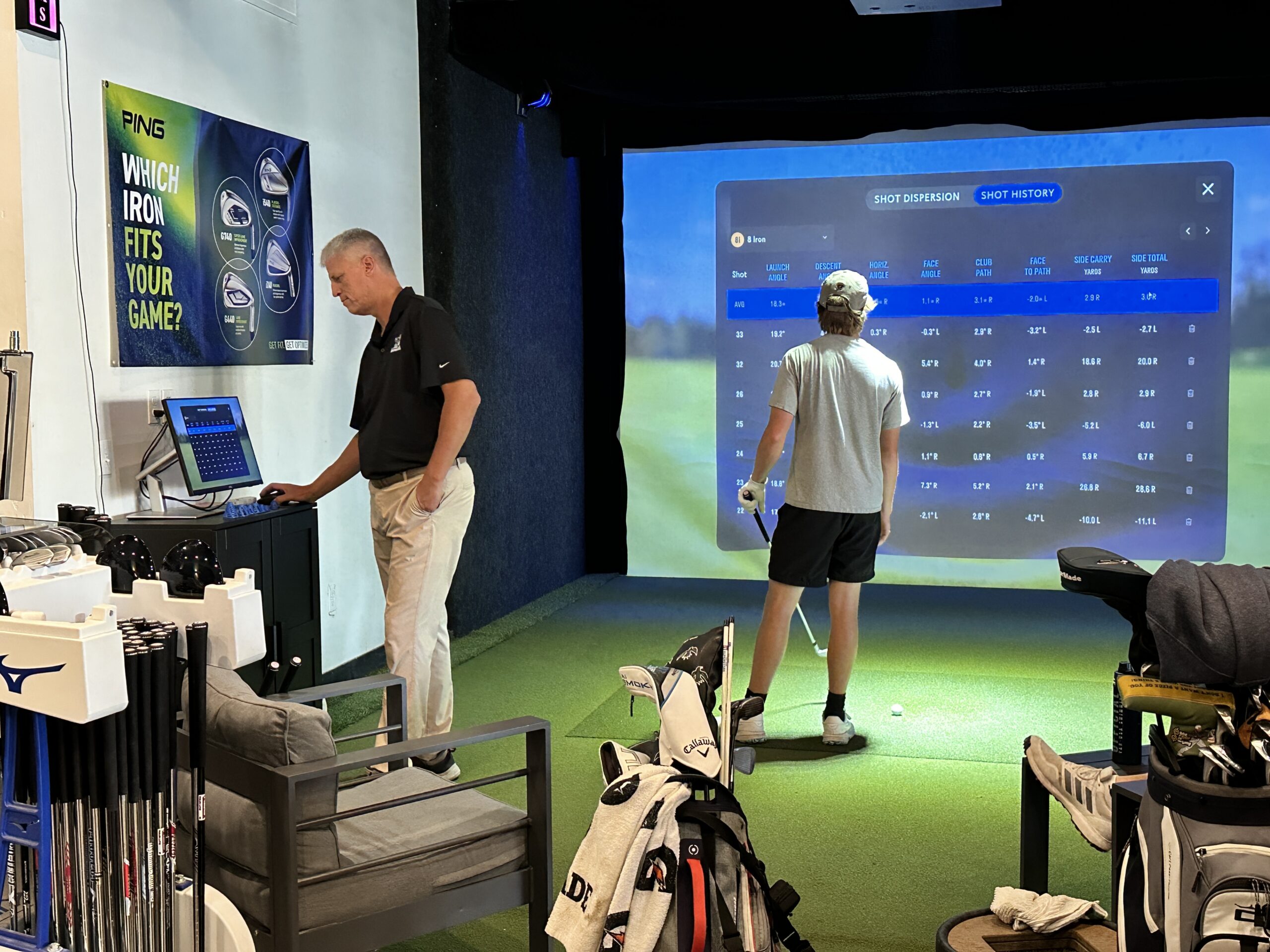
A good fitting shouldn’t just be “Hit three balls. Here’s your club.” At Airway Hills, our pros take the time to understand you and your game before recommending anything:
- Get to know your game: We talk through your experience, goals, current equipment, physical measurements, and struggles.
- Warm up and observe: As you hit your current clubs, we look for your natural habits, tendencies, and ball flight.
- Analyze your swing: You’ll use the Mizuno Swing Optimizer to measure things like swing speed, tempo, lie angle, attack angle, and more.
- Test your options: Using that information, we’ll narrow down a few club and shaft combinations that make sense for your swing.
- Fine-tune and compare: You’ll hit the options, we may make a few small swing or setup adjustments, and we’ll help you determine what feels and performs best.
- Make the right decision: From there, you can purchase the clubs, take some time to think about it, or—if we believe lessons would be a better investment right now—start there instead.
The goal isn’t simply to sell you a club. It’s to help you make the best investment in your game.
Ready to Find Out If Your Clubs Fit You?
Have a Specific Golf Question for Trent?
This article is part of our Tips with Trent series at Airway Hills Golf Center.
Trent is a PGA Professional with more than 30 years of experience teaching golfers of all skill levels. Through Tips with Trent, he answers common golf questions using real lessons, real playing experiences, and questions from golfers like you.
Have something about your golf game you’re struggling with?
Send us your question. It could become the next Tips with Trent.
Frequently Asked Questions
Is golf club fitting worth it?
For many golfers, yes. A fitting can help you determine whether your clubs are actually suited to your body, swing, and goals—and can help you make a more informed equipment decision.
What does a golf club fitting look at?
A professional fitting can consider height, arm length, stance, swing speed, tempo, swing path, attack angle, ball flight, shaft characteristics, club length, lie angle, grip size, and more.
Do I need to be a good golfer to get fitted?
No. Golfers of all skill levels can benefit from properly fitted equipment. In some cases, lessons may be a better first investment, which is something a good fitter should be willing to tell you.
Can a club fitting fix my swing?
A fitting won’t replace golf lessons, but it can identify equipment that may be making your swing or ball flight harder to manage. A fitting may also reveal small setup or swing adjustments that can help you get more out of your equipment.
How much does a club fitting cost at Airway Hills?
Club fittings at Airway Hills are free when you purchase your equipment through us. If you’d like to take your fitting numbers home without purchasing, the fitting is $125.
Recent Comments